Kindness at work is routinely dismissed as a soft concern, the sort of thing that appears on a values poster and has no bearing on results. That dismissal usually rests on a confusion: people are thinking of niceness, which is about avoiding discomfort, and calling it kindness, which is about acting in someone's genuine interest. The two frequently point in opposite directions.
Nice is telling someone their presentation was fine. Kind is telling them the third section lost the room, and helping them fix it before the board meeting. Nice is avoiding the conversation about performance until the exit interview. Kind is having it in month two while there is still time to change the outcome.
This guide covers what kindness at work actually is, why it produces measurable results, how it differs from niceness in practice, what kind managers do differently when the news is bad, and how to be kind without becoming ineffective.
What is kindness in the workplace?
Kindness at work is acting in the genuine interest of the other person, including when that is uncomfortable for you or for them. It is defined by the outcome for the recipient, not by the pleasantness of the interaction. That is what separates it from niceness, which is defined by the absence of friction.
Three components:
Intent directed at their interest. Not at your own comfort, not at being liked, not at avoiding a difficult ten minutes.
Willingness to bear cost. Kindness usually costs you something: time, an awkward conversation, a small amount of your own standing. If it is free, it is probably just courtesy, which is fine and different.
Respect for their agency. Treating someone as capable of handling the truth. Withholding difficult information to protect someone's feelings is, on examination, a judgement that they cannot cope, which is not a kind assumption.
That third one is the most counterintuitive and the most important. A great deal of workplace unkindness is delivered in the language of protection.
Why is kindness important at work?
Kindness matters because it determines whether people tell you the truth, whether they stay, and whether they do their best work or their safest work. Every one of those has a direct organisational cost, which is why treating kindness as a soft issue is an analytical error rather than a hard-headed position.
The mechanisms:
It is the precondition for honest information
People do not bring problems to those who react badly. In a team where mistakes are met with contempt, mistakes get hidden, and hidden mistakes get expensive. The reaction of senior people to bad news is what determines the speed at which an organisation learns anything.
Incivility measurably degrades performance
Christine Porath's research on workplace incivility has documented this consistently across studies: people who experience rudeness deliberately reduce their effort, avoid the offender, and produce measurably worse work, and so do people who merely witness it. The cost is not limited to the target. This is one of the few areas where the soft-sounding thing has hard numbers behind it.
It is the strongest driver of retention
People leave managers far more often than they leave companies. The daily experience of being treated with respect, or not, is what most people are actually reporting when they describe a job as good or bad. Replacement costs in most professional roles run to several months of salary, which makes ordinary decency a significant financial matter.
Difficult feedback only works inside a kind relationship
Feedback lands or bounces depending on whether the recipient believes you are on their side. The same words from a person who has demonstrated they care produce change. From someone who has not, they produce defensiveness. Kindness is what makes candour usable.
It compounds through reciprocity and reputation
The colleague you were decent to during their difficult year remembers it for a decade. Indian professional networks are dense, people move between companies within the same city and industry constantly, and reputation for how you treat people under pressure travels much further than reputation for output.
It costs almost nothing
This is the part that makes the whole argument uncomfortable. Most workplace unkindness is not strategic. It is carelessness under time pressure: the curt reply, the public correction, the meeting scheduled over someone's leave. The fix is attention, not sacrifice.
What is the difference between kindness and niceness?
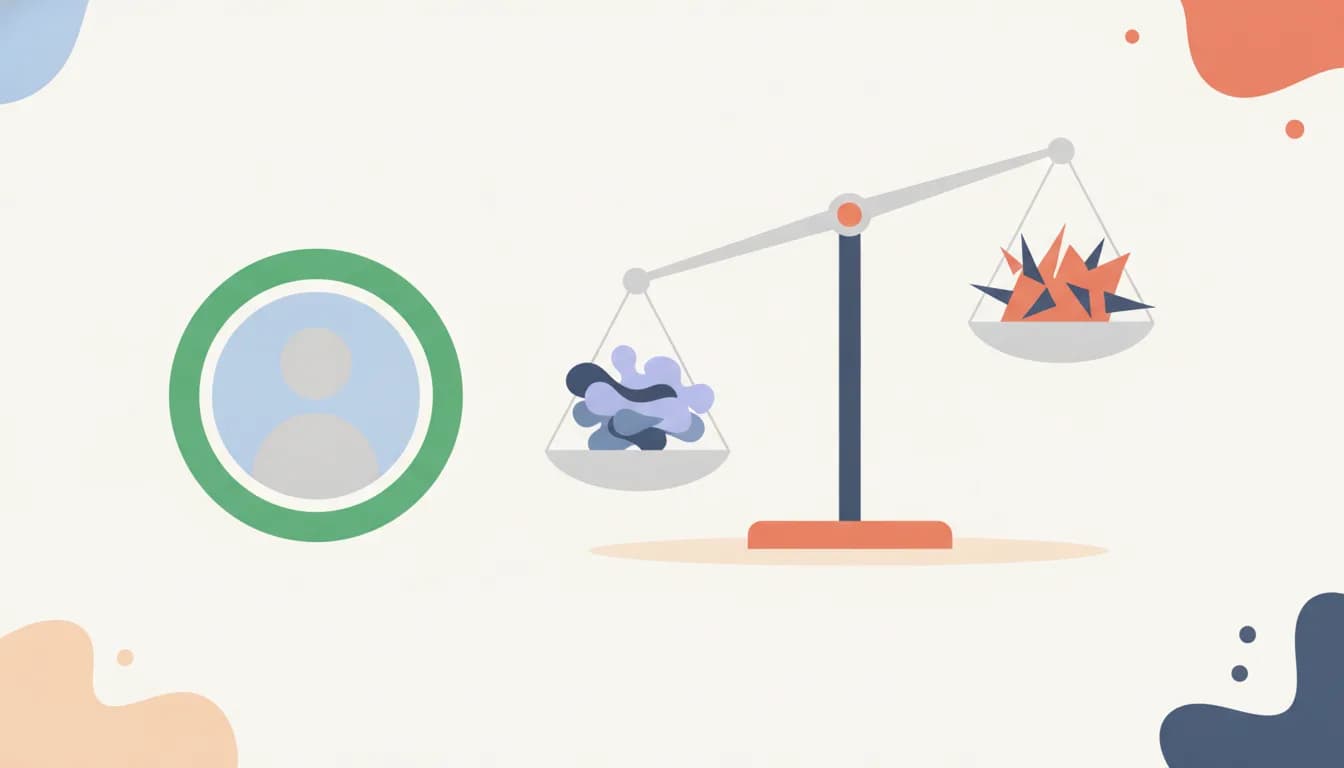
Niceness optimises for the comfort of the interaction. Kindness optimises for the wellbeing of the person. When those conflict, and they conflict constantly at work, niceness chooses the pleasant conversation and kindness chooses the useful one.
| Situation | Nice | Kind |
|---|---|---|
| A colleague's work is not good enough | "This looks great" | "The analysis is solid, the conclusion does not follow from it. Can I show you where I lost the thread?" |
| Someone is not going to get the promotion | Avoid the topic until the announcement | Tell them a quarter in advance, with the specific gap and a plan |
| A team member is struggling personally | Do not mention it | "You have not seemed yourself. No pressure to talk, but if there is something I can take off you, say so" |
| A junior person is about to make a mistake | Let them find out | Flag it privately, immediately, without making it a lesson |
| Someone is being let go | Delay, soften, obscure the reason | Tell them clearly, early, with full notice, help with the next step |
| A peer's idea is weak | Agree in the meeting, complain afterwards | Say the objection in the meeting, to their face, with the reasoning |
The pattern: niceness defers the cost, usually onto the other person and usually with interest. Kindness pays it now.
Kim Scott's radical candour framework maps this well. Caring personally without challenging directly produces what she calls ruinous empathy, which is the most common failure mode in decent organisations and is far more damaging than it sounds. It is the manager who never tells anyone the hard thing and then has to fire them, and both parties are shocked.
What do kind managers do differently?
Kind managers front-load discomfort. They have the difficult conversation early, when it is small and fixable, rather than late, when it is a formal process. Almost everything else follows from that one habit.
Specifically:
They tell people where they stand, continuously. Nobody is surprised by their appraisal rating. If someone is not going to be promoted this cycle, they hear it three months out with the reason, not on the day.
They deliver bad news themselves, in person, early. Not by email, not through HR, not on a Friday afternoon with no chance to talk. The person hears it from the person who decided it.
They separate the person from the work. "This analysis does not hold up" is about the work. "You are careless" is about the person. The first is usable feedback and the second is an attack disguised as one.
They protect people's time and dignity in small ways. Not scheduling over leave. Not calling out an error in a group channel. Not making someone explain a personal situation in more detail than necessary.
They give specific praise, publicly, and specific criticism, privately. The reverse of what most people do under pressure.
They handle exits well. How someone is treated on the way out is watched by everyone who stays, and it tells them what will happen to them. Full notice, clear reasons, help with references and introductions. This costs the organisation very little and it is the single most-observed act of a manager's career.
They notice. The colleague who has been quiet for two weeks, the person whose work has slipped for the first time in three years. Noticing and asking once, without pressing, is most of what kindness at work amounts to.
How do you deliver bad news kindly?
Say it early, say it clearly, and stay in the room afterwards. Most unkindness in delivering bad news comes from the deliverer's discomfort: they delay because it is hard, they hedge because clarity is uncomfortable, and they leave quickly because the aftermath is awkward. All three make it worse for the recipient.
A structure that works:
Give a short warning. "I have got some difficult news, I want to give you it straight." One sentence of preparation, not five minutes of ominous small talk.
State it plainly and early in the conversation. Do not build up to it. The build-up is for your benefit and it is agonising for theirs.
Give the real reason, at a level of detail they can use. Vague reasons deny people the ability to act on the information, which is a cost dressed up as protection.
Do not over-apologise. Extended apology forces the recipient to reassure you, which makes your discomfort their responsibility.
Say what happens next, concretely. Dates, process, what you will do to help. Uncertainty is often harder than the news itself.
Then stop talking. Let the silence sit. The instinct to fill it with justification is strong and unhelpful.
Follow up the next day. The second conversation, after they have processed it, is where the actual help happens. Most people skip it because the first one was uncomfortable, and skipping it is the unkindest part of the whole sequence.
Can you be too kind at work?
You can be too nice, which looks like kindness and is not. Genuine kindness has a limit built in, because acting in someone's real interest sometimes means declining, correcting, or letting them experience a consequence. What people call excessive kindness is almost always conflict avoidance wearing better clothes.
The failure modes to watch:
Rescuing. Repeatedly fixing someone's problems so they never develop the capability. Feels generous. Produces dependency and eventually a person who cannot do their job, which is a much worse outcome for them.
Withholding feedback. Protecting someone from criticism until the situation is unrecoverable. This is the most common and most damaging version, and it usually ends in a performance process that could have been avoided a year earlier.
Absorbing all the cost. Taking on everyone's overflow until you cannot deliver your own work. Not kindness, just a boundary problem. Covered in how to help colleagues without burning out.
Tolerating harm. Being kind to a person whose behaviour is damaging others is unkindness to everyone else. This is where kindness and conflict avoidance are most often confused, and where the confusion is most expensive.
The test: are you doing this because it is good for them, or because the alternative is uncomfortable for you? Honest answers to that question resolve most cases.
How do you show kindness at work in practical terms?
Kindness at work is mostly small, specific and unannounced. The grand gestures are memorable and rare; the ordinary version is what people actually experience.
- Tell someone something they need to hear before it becomes a formal problem.
- Give credit by name, in the room where it matters.
- Notice when someone has been off for a fortnight and ask, once, without pressing.
- Do not schedule over someone's leave, and do not message them on it.
- Correct people privately. Praise them publicly.
- When someone makes a mistake, ask what happened before you say anything else.
- Answer a junior person's question properly rather than pointing at a document.
- Warn someone about a stakeholder's real objection before they walk into the meeting.
- Take something off a colleague's plate in a genuinely bad week, without making it a favour they owe you.
- Say the thing you appreciate about someone's work directly to them, not just about them.
- When you are the reason something went wrong, say so first and clearly.
- When someone leaves, help them properly: introductions, a reference, a recommendation written without being chased.
None of these takes more than a few minutes. Collectively they are what people mean when they say a team was a good place to work.
Frequently asked questions
Why is kindness important in the workplace? Because it determines whether people tell you the truth, whether they stay, and whether difficult feedback lands or bounces. It also has measurable performance effects: research on workplace incivility shows that rudeness reduces the effort and output of both targets and witnesses.
What is the difference between kindness and niceness at work? Niceness optimises for a comfortable interaction. Kindness optimises for the other person's actual interest, including when that requires an uncomfortable conversation. Telling someone their work is fine when it is not is nice. Telling them what is wrong and helping fix it is kind.
Can you be kind and still give critical feedback? Kindness usually requires it. Withholding feedback denies someone the ability to improve while there is still time, and it is a judgement that they cannot handle the truth. The kind version separates the work from the person and arrives early enough to be useful.
What are examples of kindness at work? Flagging a mistake privately before it becomes public, giving credit by name, telling someone they are not on track for promotion months in advance rather than on the day, not messaging people on leave, and helping properly when someone is leaving the organisation.
Can you be too kind at work? You can be too nice. Genuine kindness has a natural limit because acting in someone's real interest sometimes means declining or correcting. Rescuing people repeatedly, withholding feedback and tolerating harmful behaviour are all conflict avoidance rather than kindness.
How do I deliver bad news kindly? Say it early, state it plainly near the start rather than building up to it, give the real reason at a usable level of detail, avoid over-apologising, set out concretely what happens next, then stop talking. Follow up the next day, which is where the actual help happens.
Does kindness make you look weak at work? Only if it is confused with agreeableness. Kindness combined with directness reads as strength, because it takes more nerve to tell someone a hard truth while clearly on their side than to either avoid it or deliver it carelessly.
How does kindness relate to psychological safety? Psychological safety is the belief that you can raise a problem or admit an error without being punished. It is built almost entirely by how people react when someone does. Consistent kindness in those moments is the mechanism that produces it.
Related reading
- Empathy and emotional intelligence at work
- Why helpfulness is important at work
- Why honesty is important in the workplace
Kindness is one of eight working values assessed by the Goodspace Goodness Score, alongside reliability, integrity, honesty, teamwork, truthfulness, helpfulness and friendliness. Since kindness is judged far more accurately by the people on the receiving end than by yourself, the assessment validates your responses against peer input. Take the assessment.