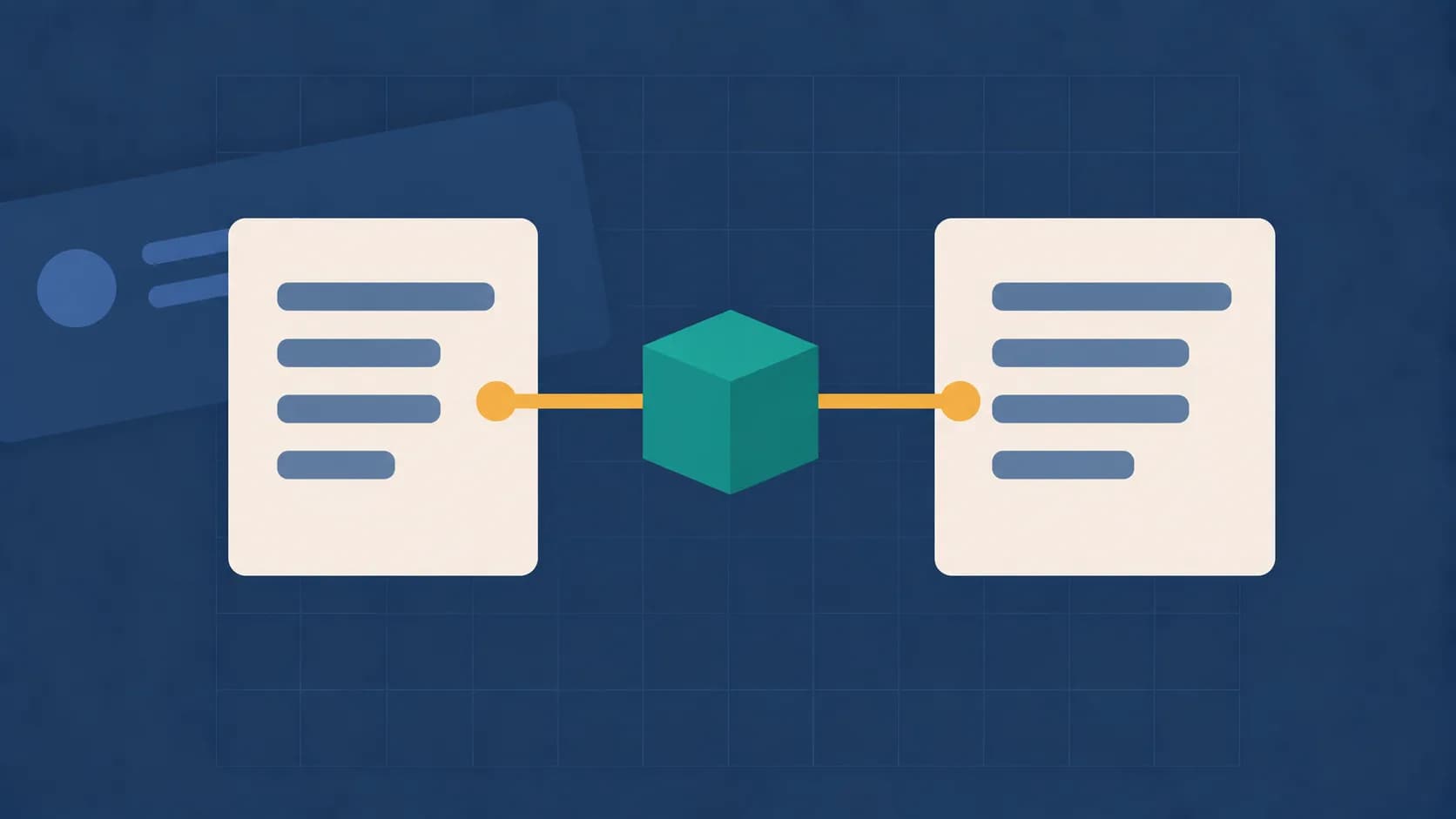
HR outsourcing companies take over defined parts of your human resources function, most commonly payroll, statutory compliance, and recruitment. The decision is rarely all or nothing. The companies that get value from outsourcing are the ones that separate work that is transactional and rule-bound from work that requires judgement about their own people.
Payroll is transactional. A termination conversation is not. That line, more than cost, is what should decide what leaves your building.
Is recruitment the piece you want off your plate? Goodspace runs hiring as a service with a dedicated recruiter and AI sourcing across 10 million plus verified profiles, on a flat success fee. See how it works
What is HR outsourcing?
HR outsourcing is the contracting of specific HR processes to an external provider who executes them on your behalf, usually under a service agreement with defined deliverables and timelines. It differs from consulting, which advises, and from staffing, which supplies people.
The Indian market has four broad provider types and they are not interchangeable:
Payroll bureaus. Narrow and deep. They process salaries, compute TDS, generate payslips and file returns. Usually the cheapest per employee and the most reliable, because the work is highly standardised.
Compliance specialists. Handle EPF, ESI, Professional Tax, Labour Welfare Fund, Shops and Establishments registrations and the state-wise returns. Valuable to multi-state employers, where the combinatorial complexity is genuinely hard to manage internally.
Recruitment providers. Agencies and RPO firms. Covered in more depth in the RPO guide.
Full-service HR partners. Bundle several of the above plus policy, documentation and advisory. Convenient, and usually a compromise on depth in at least one area.
What should you outsource?
Outsource work that is rule-bound, repeatable, penalised when late, and does not require knowledge of your specific people. Those four conditions describe payroll and statutory compliance almost perfectly, which is why they are the most commonly and most successfully outsourced functions.
Good candidates for outsourcing:
Payroll processing. Rules-driven, deadline-bound, and mistakes are expensive but objectively detectable. Providers do it at scale with better controls than a one-person internal team can maintain.
Statutory compliance and returns. EPF and ESI filings, Professional Tax across states, Labour Welfare Fund, and the returns each state's Shops and Establishments Act requires. The complexity scales with the number of states you operate in, not with your headcount, which is why a 60 person company across five states often has a harder compliance problem than a 300 person company in one city.
Background verification. Specialist providers have the databases, the university contacts and the process. Doing this internally is slow and usually incomplete. See the background verification guide.
Sourcing and first-round screening. The most repeatable part of recruitment and the most common bottleneck.
Benefits administration. Group insurance, claims coordination, renewals.
What should you never outsource?
Keep anything where the answer depends on knowing your people, your culture or your commercial context. These are judgement functions, and an external provider making them on your behalf creates risk that is not visible until it is expensive.
Keep in house:
Termination and disciplinary decisions. A provider can prepare documentation and advise on process. The decision, and the conversation, must be yours. In India this also carries legal exposure that does not transfer with the contract.
Compensation philosophy. Benchmarking data can be bought. What you choose to pay, and why, is strategy.
Performance management. Ratings and calibration require knowing what good looks like in your context.
Culture and employee relations. Grievances, conflicts, the reason your best engineer is unhappy. No provider will notice these.
Final hiring decisions. Sourcing and screening outsource well. Deciding who joins your team does not.
POSH Internal Committee. The Sexual Harassment of Women at Workplace Act 2013 requires an Internal Committee constituted from your own organisation, with a presiding officer who is a senior woman employee and at least one external member from an NGO or a person familiar with issues relating to sexual harassment. You cannot outsource the committee itself.
That last point catches people out. Advisory support is available and often sensible, but the statutory body must exist inside your organisation.
How much does HR outsourcing cost in India?
Pricing varies by function, and the models are not comparable. Ranges are stated as ranges because they genuinely move with headcount, number of states, and complexity.
| Function | Model | Typical shape |
|---|---|---|
| Payroll processing | Per employee per month | Falls sharply with headcount |
| Compliance and returns | Monthly retainer | Scales with number of states, not just headcount |
| Recruitment | Percentage of CTC or flat fee | 8.33% to 20% of CTC is the common agency band |
| Background verification | Per candidate | Depends on the number of checks in the pack |
| Full-service bundle | Per employee per month | Cheaper per unit, deeper in some areas than others |
The variable that surprises most finance teams is the state count. A compliance retainer for a company operating in one state and one for a company operating in six are not comparable numbers, because each state carries its own registrations, returns, rates and due dates.
How do you evaluate HR outsourcing companies?
Judge them on controls and continuity, not on the sales deck. For transactional work, the questions that matter are about what happens when something goes wrong.
Ask:
"What is your error rate on payroll runs, and how is it measured?" Providers who track this can answer. Providers who cannot are not measuring.
"Who is liable if a statutory filing is late?" Read the contract, not the answer. Many agreements cap liability at the monthly fee, which does not cover a penalty.
"How many clients does the person handling our account carry?" Same question as for recruiters, same predictive power.
"What is your process when a statutory rate or due date changes?" Rates and thresholds change. You are buying the provider's ability to track that.
"Can we export our data, in what format, and how quickly?" Test the exit before you enter.
"What happens during the first month of transition?" Parallel runs are standard for payroll. A provider who does not propose one is cutting corners.
What are the risks?
Outsourcing transfers execution, not accountability. Regulators, employees and courts hold the employer responsible, and the service agreement is a commercial matter between you and the provider rather than a defence.
The specific risks worth planning for:
Liability does not transfer. If EPF contributions are not deposited, the employer is answerable. Recovering from the provider is a separate, slower matter.
Data exposure. You are handing over salary data, identity documents, bank details and often PAN and Aadhaar. Under the Digital Personal Data Protection Act 2023, obligations around personal data are real and the employer's position needs to be clear in the contract.
Knowledge loss. Outsource for long enough and nobody internally understands how the process works. This is fine until you want to change provider.
Switching cost. Payroll migrations mid-year are painful because of year-to-date tax computation. Plan transitions for the start of a financial year where possible.
Employee experience. Employees whose payroll query goes to an anonymous ticket queue notice. Keep a named internal person as the front door even when the processing is external.
Should a small company outsource HR at all?
Below roughly 30 employees, most companies are better served by good software plus a compliance consultant on retainer than by a full outsourcing arrangement. The fixed cost of managing a provider is real, and at small scale it can exceed the work being outsourced.
A rough progression that matches how Indian companies actually grow:
Under 10 people. Founder or ops lead runs HR. Buy payroll software. Register for what applies to you. Note that the POSH Internal Committee requirement starts at 10 employees, so plan for it before you cross the line rather than after.
10 to 30. Payroll to a bureau, compliance to a consultant on retainer. No internal HR hire yet. Recruitment through agencies or a platform as needed.
30 to 100. First internal HR generalist, focused on people rather than process. Payroll and compliance stay outsourced. Recruitment is the swing decision and usually depends on how many roles you run at once.
100 plus. Internal HR team with specialisation beginning. Payroll often stays outsourced permanently because it never becomes a differentiator.
Notice that payroll rarely comes back in house at any stage. That is the mark of a well-chosen outsourcing decision: it stays solved.
Recruitment is usually the loudest gap. If hiring is the function you want operated rather than advised on, Goodspace does that on a flat success fee with no retainer. Talk to Goodspace
Where Goodspace fits
Goodspace does not do payroll or statutory filings. It covers the recruitment slice, which is the piece most companies find hardest to outsource well because quality is harder to specify than a payroll run.
Dedicated recruiter for continuity, so the person working your roles knows your business rather than picking up a ticket.
Goodex for sourcing at the top of funnel, searching, unlocking and reaching across more than 10 million verified profiles, as a dashboard or an API into your own tooling.
Job posting with AI shortlisting so inbound applications arrive ranked against your requirements.
Flat success fee, which removes the two things companies dislike most about outsourced recruitment: paying a retainer for capacity you may not use, and paying more because the candidate happens to be senior.
Conclusion
The right question is not whether to outsource HR but which parts. Rule-bound, deadline-driven, penalty-carrying work belongs outside. Judgement about your own people belongs inside, and the POSH Internal Committee legally has to.
When you do outsource, remember that execution transfers and accountability does not. Read the liability cap, insist on data portability, plan the transition for a financial year boundary, and keep one named internal person as the human front door. Those four decisions matter more than the per-employee price you negotiate.
FAQs About HR Outsourcing Services
What is HR outsourcing? Contracting specific HR processes to an external provider who executes them for you under a service agreement. It differs from consulting, which advises rather than executes, and from staffing, which supplies people rather than running a process.
Which HR functions should be outsourced? Work that is rule-bound, repeatable, deadline-driven and does not require knowledge of your specific people. Payroll processing, statutory compliance and returns, background verification, benefits administration, and sourcing and first-round screening all fit that description.
What should never be outsourced? Termination and disciplinary decisions, compensation philosophy, performance management, employee relations, and final hiring decisions. The POSH Internal Committee also cannot be outsourced, because the Act requires it to be constituted from within your own organisation.
How much does HR outsourcing cost in India? Payroll is priced per employee per month and falls sharply with headcount. Compliance is a monthly retainer that scales with the number of states you operate in rather than headcount alone. Recruitment is typically 8.33% to 20% of CTC through agencies, or a flat fee.
Does outsourcing transfer legal liability? No. Execution transfers, accountability does not. If a statutory filing is late or a contribution is not deposited, the employer answers to the regulator. Recovering from the provider is a separate commercial matter, and many contracts cap liability at the monthly fee.
Should a 20 person company outsource HR? Usually partially. At that size, payroll to a bureau and compliance to a consultant on retainer works well, without a full outsourcing arrangement or an internal HR hire. Note that the POSH Internal Committee obligation begins at 10 employees.
What is the biggest risk in HR outsourcing? Assuming liability moved with the work. The second biggest is switching cost, particularly for payroll, where mid-year migrations are painful because of year-to-date tax computation. Plan transitions for the start of a financial year.
How do we choose between HR outsourcing companies? Ask for their payroll error rate and how it is measured, who is liable for late filings and what the liability cap is, how many clients your account handler carries, how they track statutory rate changes, and how quickly you can export your own data.
Further Reading: Related Hiring and HR Guides
- HR consultancy services in India: what they cost
- Recruitment process outsourcing (RPO) in India
- Employee background verification in India
- Recruitment agency fees in India
Related Articles
- Manpower consultancy: an employer's guide
- Offer letter format in India: templates and clauses
- Cost per hire: formula and benchmarks
Additional Resources
- EPFO and ESIC, for registration thresholds, contribution rates and return due dates
- Your state Labour Department, for Shops and Establishments and Professional Tax obligations, which differ by state
- The Sexual Harassment of Women at Workplace (Prevention, Prohibition and Redressal) Act 2013, for Internal Committee composition requirements
- The Digital Personal Data Protection Act 2023, for obligations attached to employee personal data
Outsourcing recruitment first?
Recruitment is where most companies start, because it is the gap that hurts soonest. See how Goodspace hires in 7 days, or explore Goodex if you would rather keep the process and only add sourcing reach.