Recruitment vs Talent Acquisition: They're Not the Same
Most Indian companies use "recruitment" and "talent acquisition" interchangeably. They're not the same thing, and confusing them is costing companies crores in bad hires, high attrition, and missed growth targets.
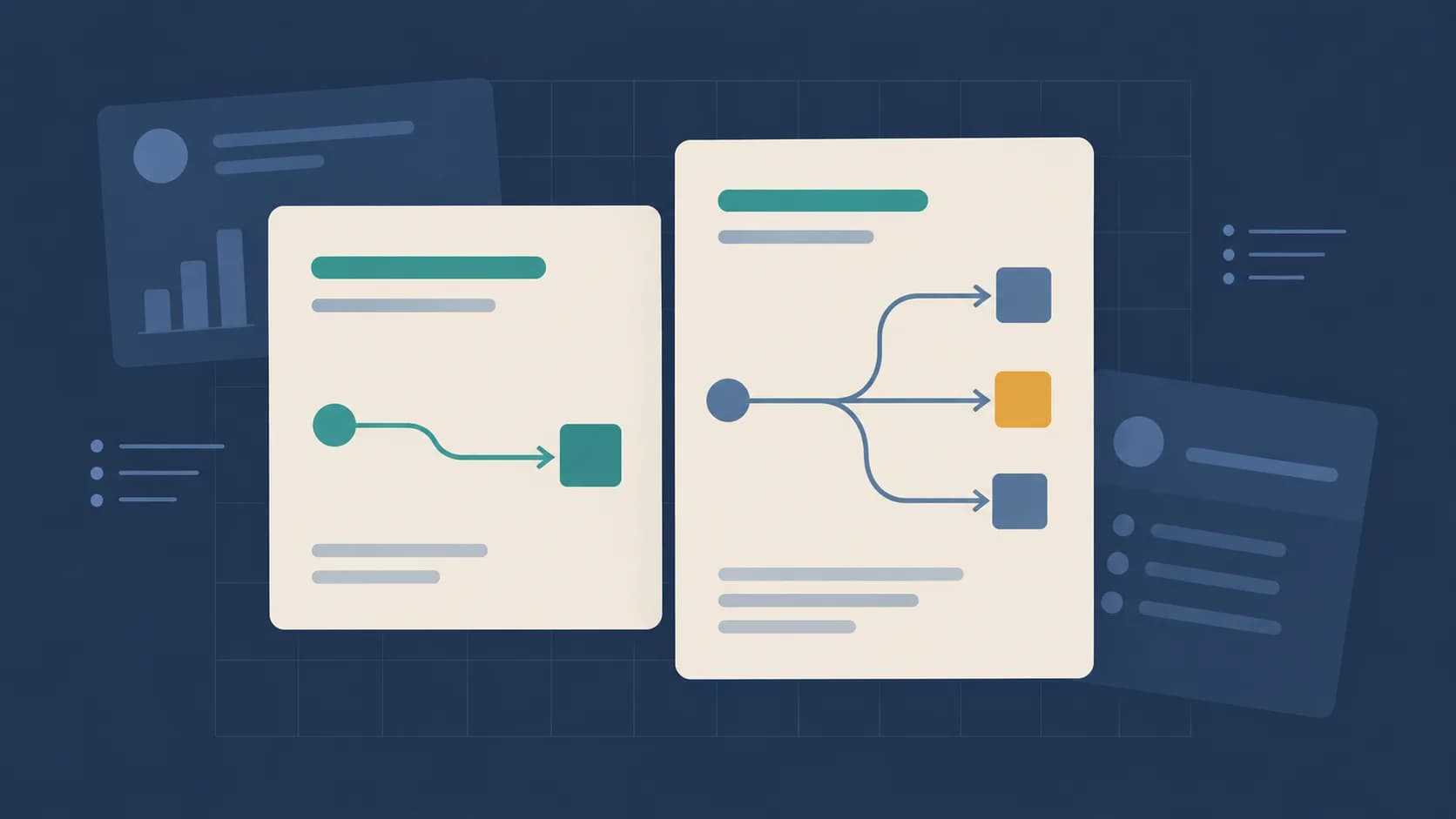
Recruitment is reactive: A position opens → you find someone to fill it. It's transactional, immediate, and role-specific.
Talent acquisition is strategic: You build a pipeline of potential candidates before positions open. You develop employer branding, nurture relationships with passive candidates, and plan workforce needs 6-12 months ahead.
Why This Matters for Indian Companies
India adds 12 million people to the workforce every year. 65% of the population is under 35. There's no shortage of candidates — there's a shortage of efficient ways to find the right ones.
Companies that only do recruitment (reactive hiring) face these problems:
- Panic hiring: Someone quits, the team scrambles, and you hire the first "good enough" candidate. 45% of Indian companies report making bad hires due to urgency.
- High cost per hire: Emergency hiring through agencies costs 15-25% CTC. Planned hiring through talent acquisition costs 5-10%.
- Revolving door: Bad hires quit within 6 months. You start the cycle again. India's average attrition rate is 21% — the highest in Asia-Pacific.
The Talent Acquisition Framework
1. Workforce Planning
Forecast hiring needs based on business goals. If you're planning to grow revenue by 50% next year, how many salespeople do you need? Engineers? Support staff? Start planning 3-6 months before the actual need.
2. Employer Branding
Why would top talent choose your company over Flipkart, Google, or the 50 other startups hiring? Your employer brand is your answer. Glassdoor reviews, LinkedIn presence, campus reputation, and employee testimonials all contribute.
3. Candidate Pipeline Building
Identify potential candidates for roles you'll need in the future. Connect with them, share content about your company, and build relationships. When the position opens, you already have warm candidates.
4. Technology-Enabled Sourcing
AI recruitment platforms have made pipeline building dramatically more efficient. Instead of manually tracking candidates in spreadsheets, AI continuously matches your future requirements against 10M+ profiles, flagging new matches as they appear.
5. Data-Driven Decision Making
Track metrics that matter: quality of hire (90-day performance), time-to-fill, cost-per-hire, offer acceptance rate, and source effectiveness. Most Indian companies track none of these.
How AI Bridges the Gap
Here's the reality: Most Indian companies (especially startups and SMEs) can't afford a dedicated talent acquisition team. They have an HR generalist who does payroll, compliance, and hiring. Asking that person to build employer branding and candidate pipelines is unrealistic.
This is where AI recruitment changes the equation:
- AI does the sourcing: No need for a dedicated sourcer when AI scans 10M+ profiles
- AI does the screening: Every application gets evaluated, not just the first 50
- AI does initial interviews: Structured video interviews at scale, with scorecards
- Humans do the strategy: Your team focuses on employer branding, offer negotiation, and candidate experience
What Indian Startups Should Do in 2026
- Forecast your next 6 months of hiring. Write down every role you'll need. Be specific — not "engineers" but "backend engineer with Python + AWS, 3-5 years."
- Fix your Glassdoor/AmbitionBox reviews. Candidates check. If you're below 3.5 stars, address it.
- Use AI for the heavy lifting. Platforms like GoodSpace handle sourcing and screening at 7% CTC — far cheaper than maintaining an in-house TA team or paying traditional agencies 15-25%.
- Track your data. Start with three metrics: time-to-hire, cost-per-hire, and 90-day retention. If you can't measure it, you can't improve it.
- Build a careers page. Sounds basic, but 40% of Indian startups don't have one. If a candidate can't find your open positions on your website, they'll go elsewhere.
The Bottom Line
Recruitment fills positions. Talent acquisition builds teams. In 2026, the companies that win the talent war in India won't be the ones spending the most on agency fees — they'll be the ones combining strategic thinking with AI-powered execution.
Start with the technology to handle scale, then layer in the strategy. Not the other way around.
Building a Talent Acquisition Strategy on a Startup Budget
You don't need a 10-person TA team to do talent acquisition. Here's how to build the strategy with minimal resources:
Month 1: Foundation
- Create a hiring plan for the next 6 months (roles, timelines, budgets)
- Set up your careers page (even a simple Google Form with role descriptions works)
- Claim and optimize your Glassdoor and AmbitionBox profiles
- Ask your best employees to leave honest reviews
Month 2: Pipeline
- Identify 50 potential candidates for your most critical upcoming roles
- Connect with them on LinkedIn (don't pitch yet — just connect)
- Share 2-3 posts per week about your company culture, product, and team
- Set up AI recruitment tools to continuously match candidates to your future roles
Month 3: Activate
- When a position opens, reach out to your pipeline first (warm outreach gets 3x response rate vs cold)
- Post on your careers page and social channels before going to agencies
- Use AI to expand the search to the broader market
- Track every metric: where candidates came from, time-to-hire, cost-per-hire
India-Specific Talent Acquisition Challenges
The Notice Period Problem
India's 60-90 day notice periods are the longest in the world. By the time a candidate serves notice, your business need may have changed, or the candidate may get a counter-offer. Solutions:
- Target candidates already in their notice period (immediate joiners)
- Negotiate buyout of notice period for critical roles
- Maintain a pipeline of candidates with 30-day or immediate availability
The Counter-Offer Culture
60% of Indian IT professionals receive counter-offers. Of those who accept counter-offers, 80% leave within 6 months anyway. Strategies:
- Understand the candidate's real motivation for switching (it's rarely just money)
- Address that motivation in your offer (flexibility, growth, culture)
- Stay engaged during the notice period with regular touchpoints
The Tier-2/Tier-3 Opportunity
While everyone fights for talent in Bangalore, Mumbai, and Delhi, tier-2 cities like Pune, Jaipur, Chandigarh, and Kochi have excellent talent at 30-40% lower salary expectations. Remote work has made this arbitrage accessible to every company.
Talent Acquisition Metrics That Matter
| Metric | Good | Average | Poor |
|---|---|---|---|
| Time to fill | <21 days | 21-45 days | >45 days |
| Cost per hire | <₹50K | ₹50K-₹2L | >₹2L |
| Offer acceptance rate | >85% | 70-85% | <70% |
| 90-day retention | >90% | 80-90% | <80% |
| Source effectiveness (% hires from best source) | >40% | 25-40% | <25% |
| Hiring manager satisfaction | >4/5 | 3-4/5 | <3/5 |
The companies that track these metrics consistently outperform those that don't. It's the difference between recruitment (filling seats) and talent acquisition (building a competitive advantage through people).